





GBP/USD exchange rate falls to a 7-month low in June
The pound fell around half a percent against the dollar on 3 June following the release of the UK’s final services PMI for May. Despite being revised up from 47.9 to 49.3, the index still signalled the first contraction in service-sector activity since April 2025.
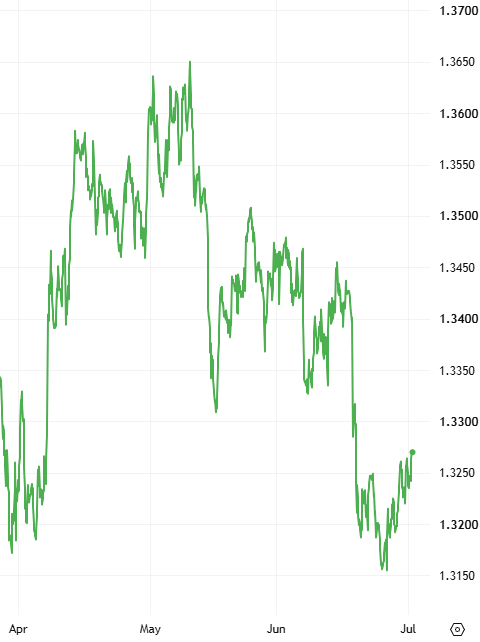
The pound slumped to around 1.333 against the dollar on 5 June after the US currency rose sharply in response to the latest US labour market figures. The economy created 172,000 jobs in May, comfortably exceeding forecasts of 85,000, bolstering expectations that the Federal Reserve will tighten monetary policy later in the year.
The pound recovered above the 1.34 benchmark on 11 June amid dollar weakness after Donald Trump rowed back on threats to strike Iran ‘very hard’ and seize one of the country’s key oil export hubs. In doing, so he claimed that Washington and Tehran had agreed a peace deal and would sign it imminently.
The dollar plunged on 15 June following reports that the US and Iran had reached a framework agreement for a potential peace settlement. However, the pound’s upside was limited by the forthcoming Makerfield by-election, with the outcome carrying potentially significant political consequences.
A softer-than-expected UK consumer price index saw the pound tumble into the 1.32 range versus the dollar on 17 June. Headline inflation was static at 2.8% in May, rather than heating up to 3% as forecast, while core inflation increased by less than anticipated. The print dampened expectations for a Bank of England (BoE) interest rate hike later this year, weighing on the UK currency.
Meanwhile, the dollar firmed after the Federal Reserve left interest rates untouched but indicated possible hikes ahead.
The pound dollar exchange rate slumped below 1.32 the following day, hitting its lowest level in two months, after the BoE struck a measured tone on inflation as it left borrowing costs untouched.
The pound was resilient on 22 June, shrugging off Kier Starmer’s expected departure from Number 10, with investors largely prepared for him to step down after less than two years in office.
Having recovered into the 1.32 range, the pound softened against the dollar the following day, nearing multi-month lows. A sharply risk-averse market mood drew investors towards the safe-haven US currency. Stronger-than-expected US PMI data also boosted dollar sentiment, with activity in the manufacturing and services sectors accelerating in June.
On June 24, the pound fell to a 7-month low versus the dollar. A downbeat market mood supported demand for the safer US currency amid persistent concerns over a possible AI bubble, alongside expectations that the Fed will raise interest rates.
The pound rose into the 1.32 mid-range against the dollar on 29 June following Andy Burnham’s first keynote policy address since announcing his campaign to become the UK’s next PM.
Figures showing the UK economy grew by 0.6% in the January-to-March period strengthened pound tailwinds the following day.
The pound dollar exchange rate ended the month around 1.325.
GBPUSD: 3-Month Chart
Looking Ahead
Influential data from the UK economy in July: Claimant Count Change (21 July), ILO Unemployment Rate (21 July), Employment Change (21 July), Consumer Price Index (22 July), Retail Sales (24 July), S&P Global Composite PMI (24 July),
Influential data from the US economy in July: ADP Employment Change (1 July), ISM Manufacturing PMI (1 July), Average Hourly Earnings (2 July), Nonfarm Payrolls (2 July), ISM Services PMI (6 July), Consumer Price Index (14 July), Producer Price Index ex Food & Energy (15 July), Retail Sales (16 July), GDP (16 July), Michigan Consumer Sentiment Index (17 July), S&P Global Manufacturing PMI (24 July), S&P Global Services PMI (24 July), GDP (30 July), Core Personal Consumption Expenditures Price Index (31 July).