





GBP/EUR exchange rate hits 10-month high in June
The pound euro exchange rate began the month on the front foot after the UK’s final manufacturing PMI reading for May revealed factory activity expanded at its fastest pace in four years.
Meanwhile, the single currency was undermined by Germany’s latest retail sales report, which indicated that consumer spending has declined for four consecutive months.
The pound retreated into the 1.15 mid-range on 3 and 4 June as investors digested the UK’s final services PMI for May, which signalled the first contraction in service-sector activity since April 2025.
The UK currency retraced its losses the following day after the euro was dented by the Eurozone’s GDP update for the first quarter, which showed growth was adjusted down from 0.1% to –0.2%.
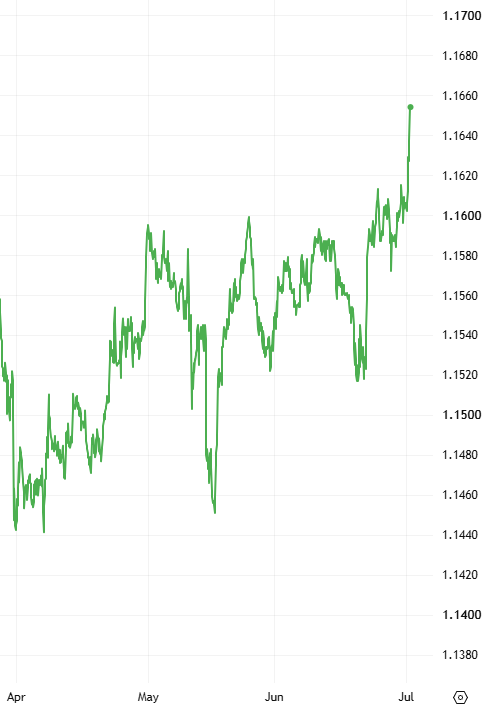
An upbeat market mood helped the increasingly risk-sensitive pound climb to within touching distance of the 1.16 benchmark on 9 June.
The euro held steady on 11 June after the European Central Bank (ECB) delivered its latest policy decision. Although the central bank raised interest rates for the first time in a year, the 25bps increase had already been fully priced in by markets. Consequently, the ECB’s upgraded inflation forecasts had a limited impact on investor sentiment towards the single currency.
The pound euro rate fell into the 1.15 mid-range on 15 June after the single currency was supported by its negative correlation with the dollar, which was undermined by reports that the US and Iran had agreed a peace framework.
The pair continued to soften over the following four days amid softer-than-expected UK inflation data, a dovish BoE rate hold, and Andy Burnham’s commanding victory in the Makerfield by-election. By 19 June, the pound had retreated to around 1.152 against the euro – a one-month low – as Burnham prepared to challenge Prime Minister Keir Starmer for the Labour leadership.
The pound jumped to within touching distance of the 1.16 level on 22 June, despite Starmer announcing he would step down after less than two years in office. Meanwhile, the euro was pressured by dovish remarks from ECB President Christine Lagarde.
The pound broke through the 1.16 level on 24 June, hitting a ten-month high against the euro. Figures signalling a surprise contraction in the UK’s key services sector failed to dampen investor sentiment. Meanwhile, the single currency was undermined by shrinking Eurozone private sector activity and a strengthening dollar.
Having settled a fraction below the 1.16 benchmark, the pound firmed against the euro on 29 June, buoyed by an upbeat response to Andy Burnham’s first major address since entering the race to become PM.
The pound rose against the euro on 30 June after revised GDP figures confirmed the UK economy gathered momentum during the first quarter.
The pound euro exchange rate ended the month around 1.1609.
GBPEUR: 3-Month Chart
Looking Ahead
Influential data from the UK economy in June: Consumer Price Index (17 June), Claimant Count Change (18 June), Employment Change (18 June), ILO Unemployment Rate (18 June), Retail Sales (19 June), S&P Global Composite PMI (23 June), GDP (30 June).