





GBP/USD exchange rate touches two-month high in July
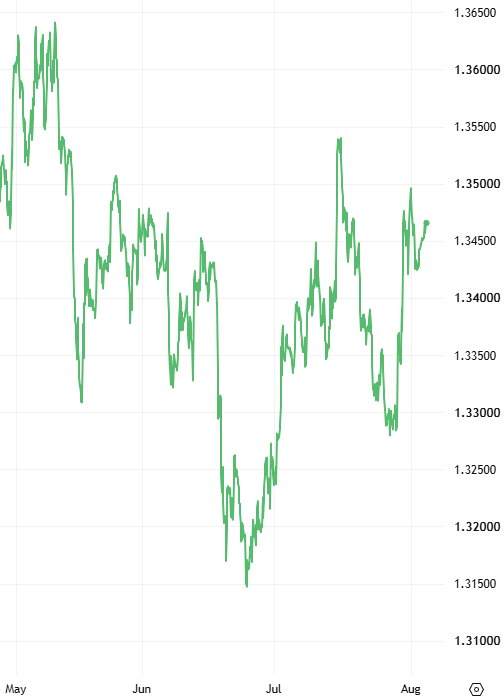
The pound dollar exchange rate jumped above the 1.33 benchmark on 2 July after the US currency tumbled on a disappointing jobs report, prompting markets to slash the odds of a Federal Reserve interest rate hike this summer. Meanwhile, the pound was bolstered by growing certainty that Andy Burnham would become Prime Minister without facing a leadership contest and would stick to Labour’s existing fiscal rules.
Having settled in the 1.33 mid-range, the pound rose to within a whisker of 1.34 on 6 July as easing political concerns in the UK continued to underpin the UK currency. A brighter market mood dampened demand for the safe haven dollar.
A scarcity of UK data and a prevailing wave of risk aversion across global markets weighed on the pound dollar rate the following day.
The pound rallied on 8 July amid growing Bank of England (BoE) rate hike expectations, before rising to an almost one-month high against the dollar in the 1.34 mid-range two days later. The move higher came as markets mulled central banks’ likely response to the latest rise in energy prices stemming from tensions in the Middle East.
Dollar strength caused the pound to slip into the 1.33 mid-range on 13 July, as renewed fighting between the US and Iran prompted investors to seek out the safe haven US currency.
The pair retraced its losses the following day after softer-than-expected US consumer price index figures weakened expectations for further Fed rate hikes, denting the dollar.
The pound jumped into the 1.35 mid-range on 15 July, touching a two-month high, following reports suggesting incoming Prime Minister Andy Burnham would select Shabana Mahmood, rather than Ed Miliband, as Chancellor of the Exchequer.
The pound arrested its gains over the next two days as markets shrugged off a positive UK GDP release and Andy Burnham pushed back on cabinet speculation. Meanwhile, escalating geopolitical tensions in the Middle East and deteriorating market sentiment supported the safe haven dollar.
UK political uncertainty weighed on the pound on 20 and 21 July, dragging it below the 1.34 level, as Andy Burnham officially became the UK’s new Prime Minister and appointed John Healey as Chancellor – catching many pound investors off guard. They also digested reports suggesting the new PM was preparing to unveil tax cuts, prompting speculation over how these measures would be funded.
The UK’s latest consumer price index had little impact on 22 July. Headline inflation cooled by more than forecast in June, down from 2.8% to 2.6%. However, core inflation remained unchanged at 2.6%, defying expectations for a slight drop to 2.5%.
The pound fell to the 1.33 basement against the dollar on 23 July after the US currency was supported by a sharp rise in global energy prices.
The pound dropped below 1.33 on 28 July, its weakest level in nearly a month, as investors tracked developments in the Middle East. Meanwhile, the dollar gained support from lingering expectations that the Federal Reserve could still raise interest rates the following day.
The Fed kept interest rates unchanged, voting 9-3 to maintain borrowing costs at 3.5% to 3.75%, and delivered broadly neutral messaging. This prompted markets to scale back expectations for future rate rises, causing the dollar to weaken.
The pound surged to around 1.347 on 30 July as investors digested the BoE’s latest interest rate decision. Although three policymakers voted for an increase, BoE Governor Andrew Bailey remarked that there was limited evidence to suggest inflationary pressures were becoming entrenched in the UK economy. Meanwhile, the dollar was undermined by US GDP data that showed economic growth unexpectedly lost momentum during the second quarter.
The pound dollar exchange rate ended the month at around 1.348.
GBPUSD: 3-Month Chart
Looking Ahead
Influential data from the UK economy in August: GDP (14 August), Claimant Count Change (18 August), Employment Change (18 August), ILO Unemployment Rate (18 August), Consumer Price Index (19 August), Retail Sales (21 August), S&P Global Composite PMI (21 August).
Influential data from the US economy in August: ISM Manufacturing PMI (3 August), ADP Employment Change (5 August), ISM Services PMI (5 August), Average Hourly Earnings (7 August), Nonfarm Payrolls (7 August), Consumer Price Index (12 August), Producer Price Index ex Food & Energy (13 August), Retail Sales (14 August), Michigan Consumer Sentiment Index (14 August), S&P Global Manufacturing PMI (21 August), S&P Global Services PMI (21 August), Core Personal Consumption Expenditures Price Index (28 August).