







GBP/EUR exchange rate recovers from multi-month lows in September
The pound euro exchange rate fell to a near two-week low around 1.163 on 2 September, as rising UK government bond yields pressured the UK currency.
The pound extended its losses the following day as it continued to feel the effects of bond market turbulence, despite a sharp decline in UK borrowing costs. This was compounded by the UK’s services PMI for August, which showed growth had been revised lower.
Having traversed the 1.16 range, the pound softened against the euro on 10 September after the European Central Bank (ECB) voted to raise its key deposit rate by 25 basis points to 2.5% in a widely expected move – a decision that supported the single currency.
The pound jumped to around 1.166 versus the euro the next day after GDP figures showed the UK economy expanded more strongly than expected in July.
The single currency was hampered by its strong inverse relationship with a strengthening dollar on 14 September, propelling the pound euro rate to around 1.168.
The pound retreated on 16 September after the UK consumer price index for August reinforced market bets that the Bank of England (BoE) would leave interest rates untouched. Although headline inflation rose from 2.9% to 3.1%, core inflation remained at 2.6%, with both readings matching forecasts.
The pound tumbled around half a per cent against the euro the next day after the BoE voted to leave interest rates unchanged at its September policy meeting.
The UK currency retraced some of its losses on 19 September, rising into the 1.16 mid-range, after retail sales figures showed consumer spending in the UK staged an unexpected recovery in August.
A downbeat UK services PMI for September undermined the pound on 23 September. The survey fell short of expectations of 52, registering 51.7, down from 52.5 in August, signalling a sharper-than-anticipated slowdown across the powerhouse services sector.
The pound euro exchange rate languished close to a one-week low the following day, after an unexpectedly strong improvement in German business confidence boosted demand for the single currency.
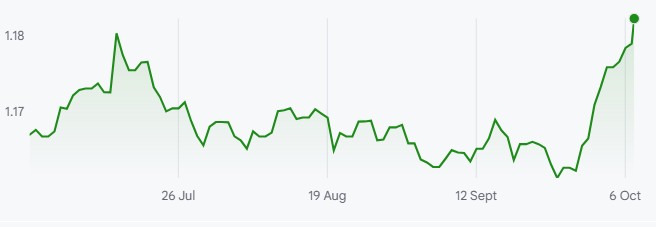
By 25 September, the pound was holding steady a fraction above 1.16, around its lowest in just under three months against the euro.
The pound euro rate rebounded from multi-month lows the next day as investors priced in tighter monetary policy from the BoE as inflation pressures build.
The pound jumped to its highest against the euro since mid-August on 30 September, after revised GDP figures showed the UK economy performed better than initially estimated in Q2. Growth was updated from 0.4% to 0.5%, leaving the UK with the strongest expansion among the G7 during the first six months of the year, adding to expectations that the BoE could hike rates in November.
The pound euro exchange rate ended the month around 1.171.
GBPEUR: 3-Month Chart
Looking Ahead
Influential data from the UK economy in October: Claimant Count Change (20 October), Employment Change (20 October), ILO Unemployment Rate (20 October), Consumer Price Index (21 October), Retail Sales (23 October), S&P Global Composite PMI (23 October).