





GBP/EUR exchange rate hits one-year high in July
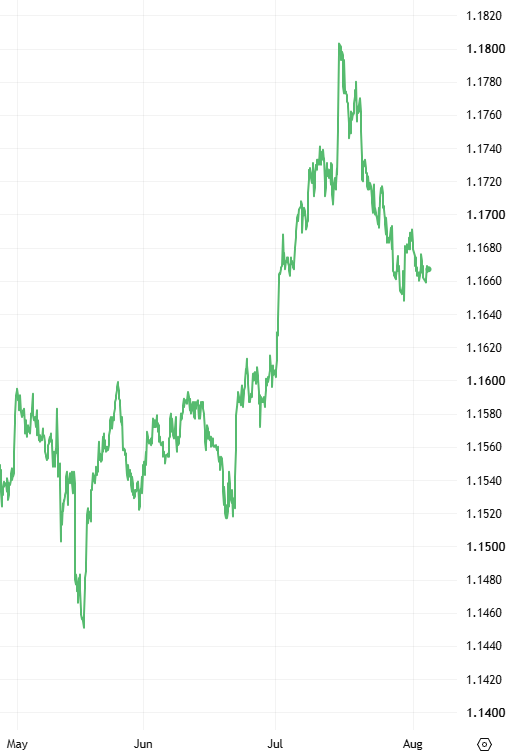
The pound euro exchange rate started the month on the front foot, jumping more than half a per cent into the 1.16 mid-range after the single currency weakened on softer inflation data. June’s preliminary inflation figures for the Eurozone showed headline inflation cooled more sharply than forecast from 3.2% to 2.8%. Meanwhile, core inflation unexpectedly eased from 2.6% to 2.4%, weighing on European Central Bank (ECB) rate hike expectations.
The pound broke through the 1.17 benchmark on 6 July as political concerns in the UK receded and the euro weakened despite upbeat German factory data.
Ongoing confidence surrounding the UK government leadership transition and growing Bank of England (BoE) rate hike expectations helped the pound consolidate in the 1.17 range on 8 July.
Following a period of relative calm, the pound euro rate wavered on 13 and 14 July amid UK political uncertainty, ECB tightening expectations, and the single currency’s inverse relationship with a weakening dollar.
This preceded a sharp rise on 15 July that saw the pound break through the 1.18 resistance level versus the euro, hitting a one-year high. Propelling it higher were expectations that Andy Burnham, who was set to become the new Prime Minister, would pick a fiscally conservative finance minister.
The pound retreated into the 1.17 mid-range over the next two days even though May’s month-on-month GDP figures showed the UK economy returned to expansion after contracting in April.
Meanwhile, Andy Burnham pushed back on speculation that Shabana Mahmood would become Chancellor.
The UK currency continued to soften on 21 July despite stronger-than-expected UK employment figures, as investors considered how new Prime Minister Andy Burnham intends to finance his fiscal agenda.
The ECB left its deposit rate unchanged at 2.25% on 23 July, as widely expected, delivering a decision that was fully priced in and therefore generated a limited market reaction.
The pound briefly drifted below 1.17 on 24 July amid cooling UK inflation, before retracing some of its losses. Providing support were the UK’s latest retail sales figures and services PMI, which both exceeded forecasts.
The pound euro rate came under pressure between 27-29 July, causing it to fall into the 1.16 mid-range. The pair retraced its losses on 30 July after the Bank of England (BoE) held interest rates but said it’s ready to raise them if the Iran war escalates – a hawkish outlook that supported the UK currency.
The pound euro exchange rate ended the month around 1.169.
GBPEUR: 3-Month Chart
Looking Ahead
Influential data from the UK economy in August: GDP (14 August), Claimant Count Change (18 August), Employment Change (18 August), ILO Unemployment Rate (18 August), Consumer Price Index (19 August), Retail Sales (21 August), S&P Global Composite PMI (21 August).